As a PhD student at Oxford studying mating behaviour, Judy Wearing was suddenly struck by a thought: what was the purpose of pubic hair? The point of armpit hair? The function of each of our body’s furry patches? When the published literature failed to produce satisfying answers, Wearing began her own investigation. Her aim was to shed light on why exactly we evolved these particular patches, with pubic hair the most puzzling of all: was it for warmth, protection … or something else?
Wearing is still tangling with those questions, some 30 years after her student days. Now an author and editor (largely in the education sector), she has revisited her fascination with hair in Anxious and Hairy: The Evolution and Culture of Human Hair, exploring its unexpectedly dense and layered place in our history and psyche. Even Wearing was surprised by the places her research on hair took her, and the mysteries that still remain to be solved. “A lot of these questions, no one’s actually looked at,” she says over Zoom. Here is a mere snip of the fascinating facts she’s uncovered about hair.
1. Hair originated with giant furry lizards
Hair, or fur, evolved about 245 million years ago with cynodonts, the warm-blooded reptilian ancestors of all mammals, including humans. They had fur for insulation, preventing heat from escaping their bodies. Fossil evidence of the wolf-like Cynognathus suggests it also had whiskers: super sensitive, tactile hairs that provide valuable sensory input.
2. Hairy or scaly, we’re made of the same stuff
You may have heard of the protein keratin, integral to human hair, skin and nails. It’s also the basis for cat claws, bird feathers, sheep wool and much else besides. Hair growth is an evolutionary modification of an ancient skin-development process by which reptiles grow scales, Wearing explains, joining the dots with our reptilian ancestors. “You can think of hair as kind of long, thin scales, in a way. Both are made of keratin.”
3. Your crowning glory is a pile-up of dead cells
Cells called keratinocytes are generated from the very base of the hair root, pushing older cells higher inside the tubular follicle. As they pile up, dead keratin cells fuse into shafts, breaking the skin and becoming visible as hair. Each hair follicle functions like a “mini organ”, Wearing says, with its own set schedule of growth and resting phases.
4. It’s not just ‘breast or bottle’
Like fur, the ability to produce milk is another defining trait of mammals. The two are more closely associated than you may think: mammary glands evolved as an adaptation of certain hair follicle glands. In Australia, the echidna and the platypus (both monotremes) embody the evolutionary path, before it diverged. Though they lay eggs, they also nurse their young via specialised milk-secreting patches of fur on their bellies.
5. We are not-so-naked apes …
Though we might appear wildly less furry than our primate relatives, Homo sapiens have the same number of follicles, found everywhere, in fact, except the palms and soles. “We have as many hair follicles as chimpanzees: two to four million of them,” Wearing says. The difference is that the majority of human hairs are very thin and fine.
6. … and terminally patchy
These shrunken “vellus” hairs that cover the body are distinct from “terminal” hairs: the thicker, stiffer and more pigmented strands growing in what Wearing terms “strategic locations” across the human body, such as the eyebrows, armpits and groin. The constellation of these patches is unique to our species, but “there is logical function” underpinning each one, Wearing says.
7. The eyes have it
Eyebrows evolved to protect our eyes and communicate social information. “When was the last time you remember flashing your eyebrows? We don’t know we’re doing it, but we’re reading those signals all the time,” she says. There is also a rich history of refining them through beauty practices. Shaping eyebrows to be thinner, as has often been the style for women, gets “interpreted as submissive and friendlier”, Wearing says. In ancient China, there was a 1,000-year-old tradition of removing all the hairs to paint on an altogether new shape, in painstaking symmetry and often non-natural colours.
8. Botox curbs empathy
Today, one fashion for brows is to stop them from moving, using Botox to prevent wrinkles. But, as Wearing points out, this has indirect implications for our communication too. Psychologists have found that the popular cosmetic procedure impairs our ability to mimic others’ emotional expressions, which curbs empathy. It sounds dystopian, but “there might actually be positive consequences”, Wearing adds. Botox is being studied as a potential treatment for depression, by interrupting the feedback loop by which we experience and express emotions.
9. Body odour is a broadcast
“Underarm and body odour are huge in our social communication,” says Wearing. Our armpit strands are stiffer than those in other places, causing them “to stick out” and broadcast our particular chemical blend. Research suggests we can sniff out not only each other’s genetic differences, but emotional states and even health. This exchange largely happens below our conscious awareness, Wearing says. “Most of us never think, ‘You smell anxious’ – but we might think, ‘You look afraid.’”
10. What about beards?
Though men and women have the same average number of follicles on their faces, the majority of adult men grow terminal hairs rather than the more typically female peach fuzz. The density is determined by genetic and hormonal differences, with beard and moustache hairs regulated by testosterone and dihydrotestosterone. It is likely that facial hair evolved as a means to compete against sexual rivals and communicate dominance. There is even a suggestion that beards – thick, strong, oilier hair – provide some protection to the jaw in the event of a punch-up.
11. Balding is not so bad
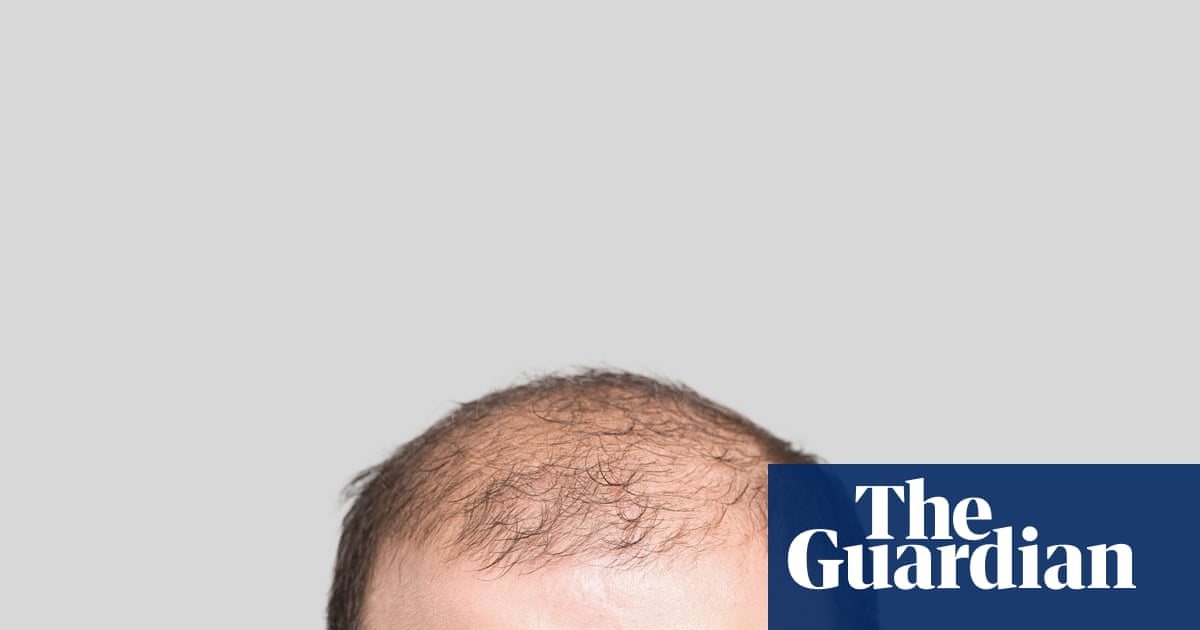
Hair loss is commonly a source of distress for men, associated with higher rates of anxiety, depression and even suicide. Yet it is a natural and even widespread experience, with more than 70% of Caucasian men experiencing thinning on top (50% by the age of 40). “There’s this notion that it’s pathological, but there’s nothing wrong with it; it’s exceedingly common and evolved for a reason.” Balding can be considered an expression of masculinity, with hair loss regulated by dihydrotestosterone, the same hormone that regulates the growth of the male genitalia. “It’s testosterone with a punch,” says Wearing, “and about as male as it gets.”
12. Hair is a health indicator
In many diverse cultures, long hair in men has been historically associated with strength – think Samson from the Bible. This isn’t just apocryphal: hair is strongly associated with age and health, among people with the genes to grow it long. It grows longer and faster through adolescence and young adults, then slows from around age 25 by about 0.4cm a year. Hair health can also reflect nutritional deficiency, with a lack of protein, iron and vitamins D and B producing more dull and brittle strands. The association between long, shiny hair and good health may be why some women tend to grow hair faster and lose it more slowly (resulting in generally longer hair) than men: it signals a healthy potential mate. Nowadays, of course, we can fake the effect and achieve sleeker, shinier strands with products.
13. Hair heals
Hair doesn’t just reflect good health; it also functions a bit like the body’s sticking plaster. Stem cells, found at the base of every follicle, support skin regeneration and repair. “They’re like mini emergency kits, all over our bodies,” Wearing says.
14. Styling has a long history …
Evidence of hair styling in women dates back to the bronze age. “If you look at the earliest statuettes and human images, You see hairstyles, braids, buns,” says Wearing. “The ancient Egyptians were just wild about wigs, curls, dyes, extensions.” Throughout history, these went in trends, and took off when commercial styling became big business, from the late 17th century. The enormous “poufs” favoured by the Parisian upper classes in the time of Marie Antoinette, sometimes reaching as far as 40cm above the scalp, were followed by short layered styles, known as Titus cuts.
15. … and not just for the rich
Fourteenth century BCE remains excavated from a cemetery in Egypt show evidence of adornments in working-class people. One woman had 70 extensions in varied colours; another elderly woman had dyed her locks with henna not long before her death. Ramses II, who ruled a century later, also covered his greys. “Like today, everyone was doing it,” Wearing says.
16. Some gentlemen did prefer blondes
Blond is consistently the most popular shade of hair dye for women, despite the effort and expense involved with maintenance. This speaks to its desirability in some quarters: “It does have some deep association with sexuality, femininity and youth,” Wearing says. In ancient Greece and Rome, “blond hair was part of a prostitute’s uniform”, at one stage required by law to distinguish sex workers from respectable women – until the upper classes started desiring lighter locks, too. Like styles, shades have moved in trends. During the 18th century in England, blond hair was considered disagreeable and best rectified with black dye.
17. Lighter hair may let in more light
The first humans had dark hair; it is still the most widespread shade on the planet. But lighter shades have evolved multiple times. DNA sequencing of Neanderthals found evidence of red hair and pale skin in Europe, and a different mutation from that found in modern humans. One theory is that fair hair – containing less UV-blocking melanin – evolved in Europe to permit more sunlight to reach the scalp, supporting the production of vitamin D in regions where deficiency is likely, but this might not explain all natural blonds. About 10% of the dark-skinned Indigenous people of the Melanesian Islands, and some Aboriginal Australians, have blond hair as children due to a unique genetic mutation.
18. Hair can express, and oppress
The hair on our head is a powerful means of self-expression, and also oppression and control. There is a long history of forced hair removal as a means of removing cultural identity or dehumanisation, such as in Nazi concentration camps and residential schools for Indigenous children in North America. The ancient Maya shaved or ripped the hair off their enemies before cutting off their heads. Through history, and across cultures, enslaved people and criminals had their heads forcibly shorn to express their lower status. On the flipside, among men in particular, shaving the skull has been a way of demonstrating purity and devotion to God, with Buddhist and Jain monks the best-known examples. It demonstrates the importance of hair to belonging, Wearing says, with its removal a sign of “removal from society”.
19. A ‘Hollywood wax’ is not so LA
Whether or not to remove pubic hair continues to be debated, with the contemporary trend (at least for women) for sweeping removal often attributed to our pornified culture. However, Wearing says, pubic hair removal has always fallen in and out of favour. “There’s this back and forth we can see, through western history and cross-culturally.”
20. So … what is the purpose of pubic hair?
Of all the questions that persist about hair, this one remains one of the biggest, at least for Wearing. Both men and women grow hair around their genitalia from puberty, complicating a search for an answer as to why it evolved: “You need an explanation that works for both sexes,” Wearing says. This particular patch is also unique to humans. Wearing’s favoured theory, “almost by process of elimination”, is that pubic hair evolved to collect smells from sexual intercourse, communicating a current or potential mate’s activities. Wearing describes it as a “cheating detector … It’s really the only plausible idea, so far, that makes any sense – although again, it’s unproven.” Though many questions remain, the long and short of it is that hair is more fascinating than we might think.